UNIPORT Activates 10.7 MW Solar Hybrid System

In Nigeria, unstable electricity has been one of the biggest silent barriers to education. For students, late-night reading often depends on phone flashlights — an inconvenient and sometimes risky option in dark, insecure environments.
In Nigeria, unstable electricity has been one of the biggest silent barriers to education. For students, late-night reading often depends on phone flashlights — an inconvenient and sometimes risky option in dark, insecure environments. Reliable power isn’t a luxury; it’s a necessity for serious academic work.
That reality just changed significantly for the University of Port Harcourt (UNIPORT).
On November 24, 2025, the Vice-Chancellor, Professor Owunari Abraham Georgewill, personally switched on the university’s new 10.7 MWp solar hybrid power plant — successfully bringing the long-awaited system online with zero reported hitches.
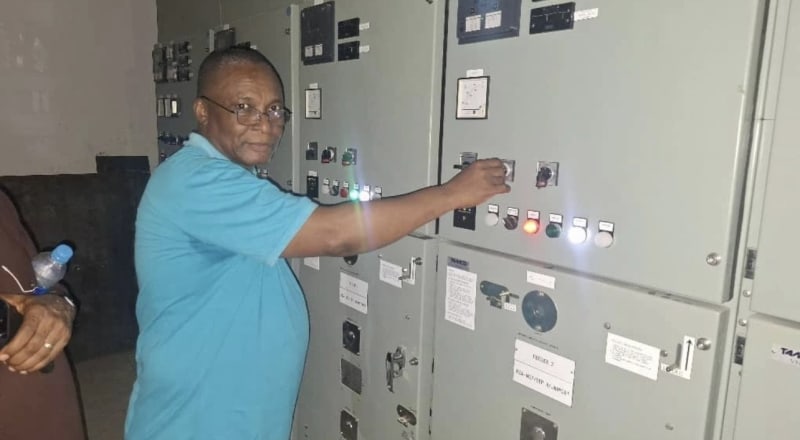
This is not a pilot or another test phase — it is the official go-live of a full-scale hybrid system (solar PV + battery storage + grid/diesel backup) now delivering uninterrupted electricity to critical zones across campus, including:
Tech and computational labs
AI and research centers
Data centers and IT facilities
Administrative blocks and the University Teaching Hospital
Phased expansion to additional areas is already in the works.
Speaking at the activation ceremony, Professor Georgewill revealed one of the most compelling benefits:
“This project will reduce our monthly electricity expenditure from approximately ₦600 million to ₦35 million — freeing up substantial resources for academic and infrastructural development.”
He, the VC, expressed profound gratitude to President Bola Ahmed Tinubu, GCFR, for championing this initiative under the Federal Government’s Energizing Education Programme (EEP Phase III), describing it as a “transformative energy intervention” that fully aligns with Nigeria’s renewable energy and sustainable development goals.
Importantly, since the activation four days ago, no public complaints have surfaced online or on social media suggesting misplaced priorities. Instead, the move has been widely welcomed as a practical, high-impact solution to a decades-long challenge.
For students pulling all-nighters on assignments, researchers running long-duration simulations, and lecturers delivering uninterrupted classes, this marks the end of an era defined by darkness and generator noise — and the beginning of one powered by clean, dependable energy.
UNIPORT has just shown that Nigerian universities can lead in both academics and in building resilient, future-ready infrastructure.
What do you think, could this be the blueprint other federal universities follow in 2026?
Drop your thoughts in the comments, and share if you know a student who’s tired of reading with a phone light.


