PiggyVest Savings Report for 2025 Has Arrived, and It is A Quiet Financial Alarm

The latest PiggyVest Savings Report for 2025 has arrived, and it reads less like a financial summary and more like a distress signal. While corporate boards talk about "resilience" and "GDP growth," this report pulls back the curtain on the real-life struggle of the average Nigerian.
The latest PiggyVest Savings Report for 2025 has arrived, and it reads less like a financial summary and more like a distress signal. While corporate boards talk about "resilience" and "GDP growth," this report shows the real-life struggle of the average Nigerian.
The numbers aren’t just worrying; they are a loud wake-up call about the deep financial strain tearing through our homes.
The Income Illusion
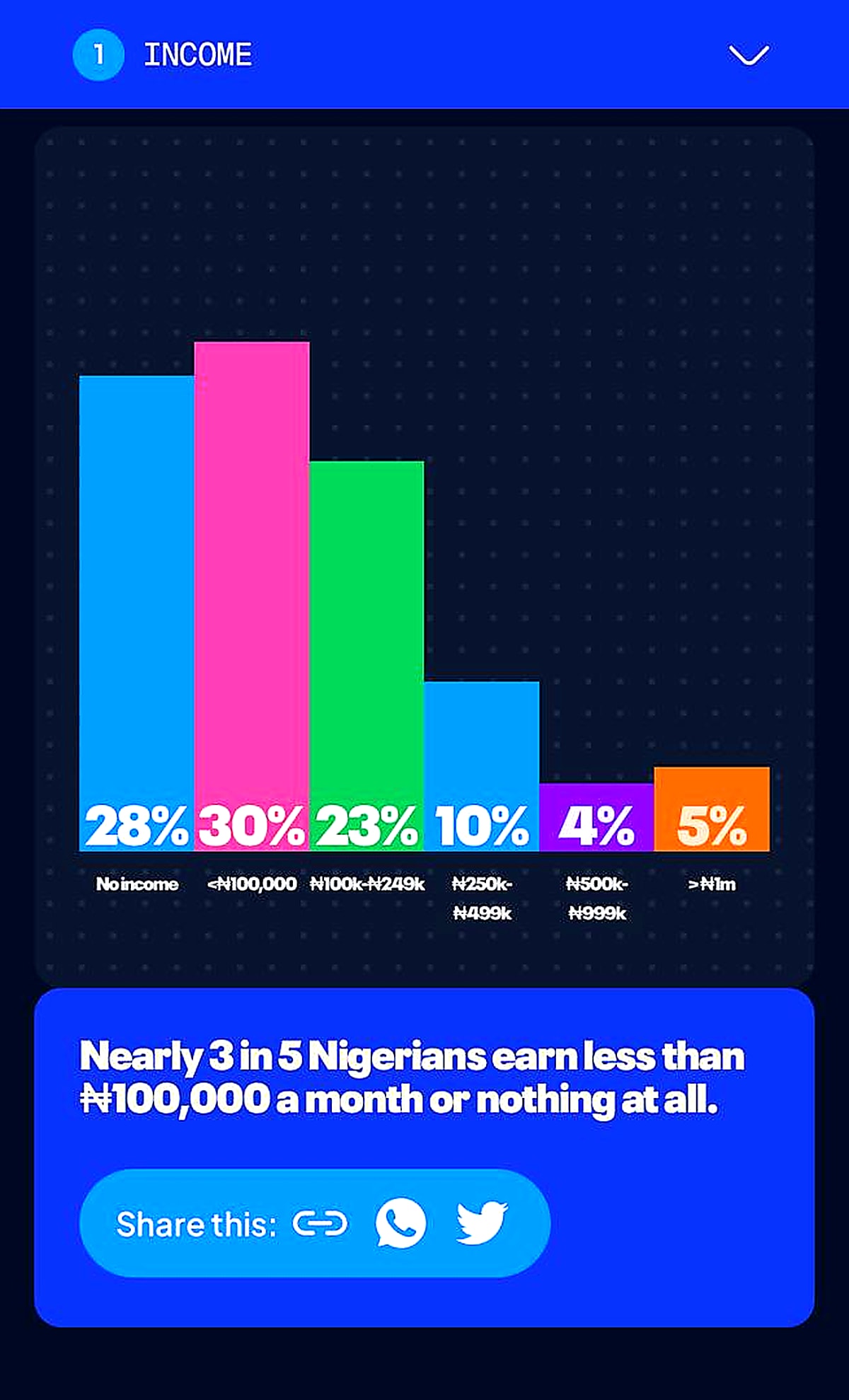
The most striking figure in the report is also the most heartbreaking: 30% of Nigerians earn less than ₦100,000 a month. To put that in perspective, at current market prices, ₦100,000 barely covers two bags of rice. It doesn't account for the 12.12% surge in food inflation we saw just this February, the rising cost of electricity, or the "school fees season" that haunts every parent.
Even more alarming, 28% of the population has no income at all. This means nearly 60% of our people are either standing still or sliding backwards. We are seeing a "masking" effect where nominal incomes might look higher than they were five years ago, but our actual purchasing power has been crushed.
The Death of the Safety Net
In the past, the "Nigerian spirit" was backed by a small emergency fund or a "contribution" (Ajo/Esusu) group. Not anymore.
The report reveals that 60% of Nigerians have no emergency savings whatsoever. When an unexpected hospital bill or a car breakdown happens, it isn't just a setback; it’s a total financial collapse.
This has led to a record spike in household debt, which hit $38.7 billion in mid-2025. People aren't borrowing to start businesses or buy houses; they are borrowing to eat. We are witnessing the death of the "rainy day" fund because, for the average Nigerian, it has been raining for years.
A Generation Facing a "Downward" Future
There is a heavy realisation in this report: This generation is on track to be poorer than the one before it.
Our parents’ generation certainly had their struggles, but they operated in a world where a steady job could eventually lead to land ownership or a comfortable retirement. Today, the "triple threat" of high inflation (still hovering around 15%), a weakened Naira, and stagnant wages has created a ceiling that feels impossible to break.
For Gen Z, the situation is even more dire. They are entering a labour market where 53% of their peers are unemployed. They are "digital natives," but they are also "financial nomads," moving from one gig to another just to stay afloat.
The Message Is Clear. We Need to Change How We Play
The "hustle" is no longer enough. You can work three jobs and still find yourself underwater if the currency devalues faster than you can earn it.
This report tells us that we can no longer rely on traditional "savings tips." We need a radical shift.
For individuals: It’s time to move beyond simple saving and look toward inflation-hedged assets or earnings in stronger currencies where possible.
For the country: We need more than fintech apps that make it easy to "save"; we need an environment where businesses can actually pay a living wage.
The PiggyVest report is a mirror. It shows a hardworking population that is being outpaced by its own economy. If we don't address these income gaps now, we aren't just looking at a "worrying report", but we are looking at a lost decade of hard work for an entire generation.


